

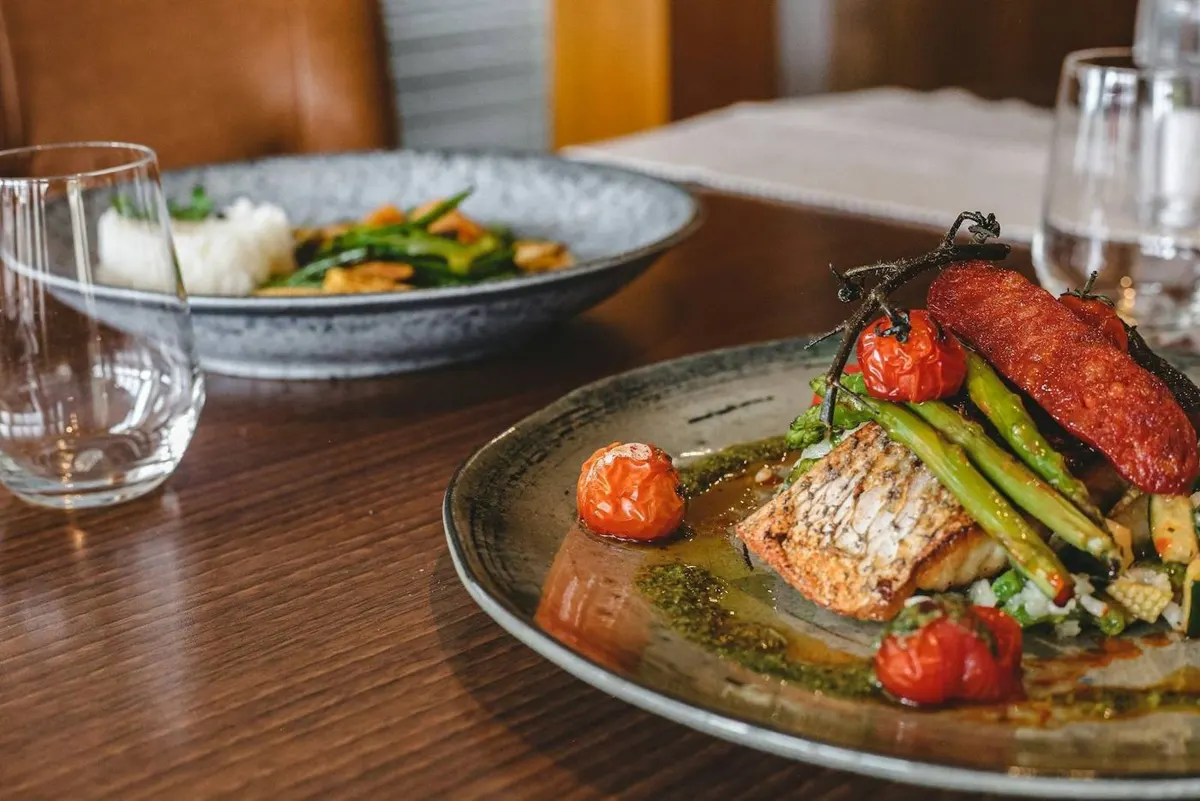
The mistake is choosing one for a job it was never designed to do. Here is how working Chefs decide.
Porcelain: the presentation choice
Porcelain is fired at very high temperatures into a dense, non-porous body. That gives it a bright, smooth glaze that makes food look its best, and a hardness that resists knife scratches. It is the default in fine dining, hotels and banquets. It is dishwasher safe and, without metallic rims, microwave safe. The trade-off is breakage, so budget for replacements. See our porcelain crockery.
Melamine: the durability choice
Melamine crockery is a hard resin moulded into shape. It is light, very hard to break and comes in almost any colour. That makes it ideal for buffets, poolside, canteens and QSRs. It is dishwasher safe but must never go in a microwave. See our melamine crockery.
Porcelain where the plate sells the dish. Melamine where the plate has to survive the service.
Side by side
| Porcelain | Melamine | |
|---|---|---|
| Best for | Fine dining, hotels, banquets | Buffets, outdoor, canteens, QSR |
| Breakage | Can chip or break if dropped | Very hard to break |
| Weight | Medium | Light |
| Microwave | Yes, without metallic rims | No |
| Dishwasher | Yes | Yes |
Many kitchens use both
A hotel might serve porcelain in its restaurant and melamine at the pool. Plan by area of service, not by one rule for the whole business. Compare all six materials in our material guide, or bring your menu to the RIKAVI showroom and we will show you both side by side.